The Spy Who Accepted Me
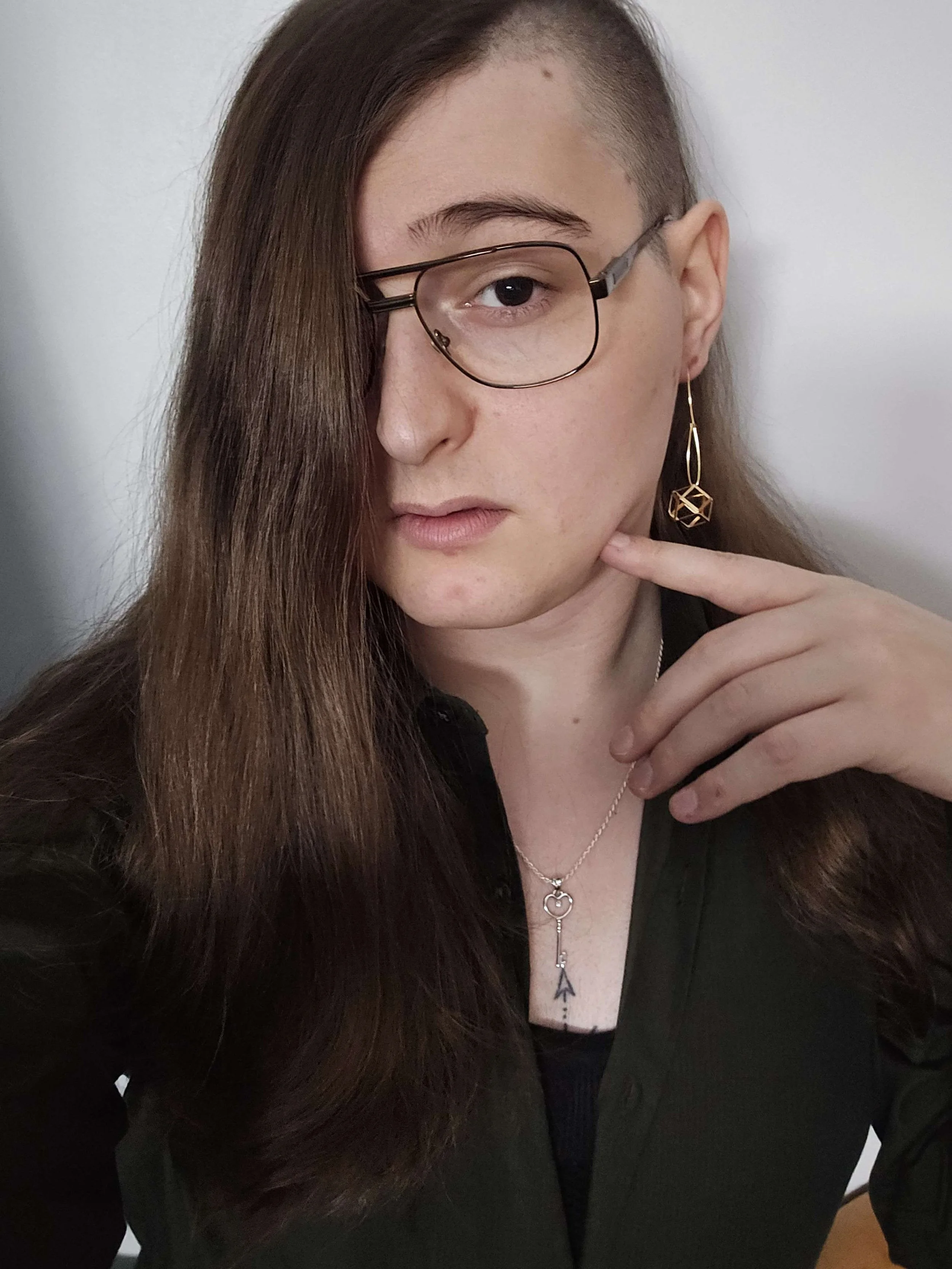
What kind of appeal does Bond have for a trans woman? For Delilah Deckert, revisiting the Bond films following her transition has allowed her to reconcile with her past.
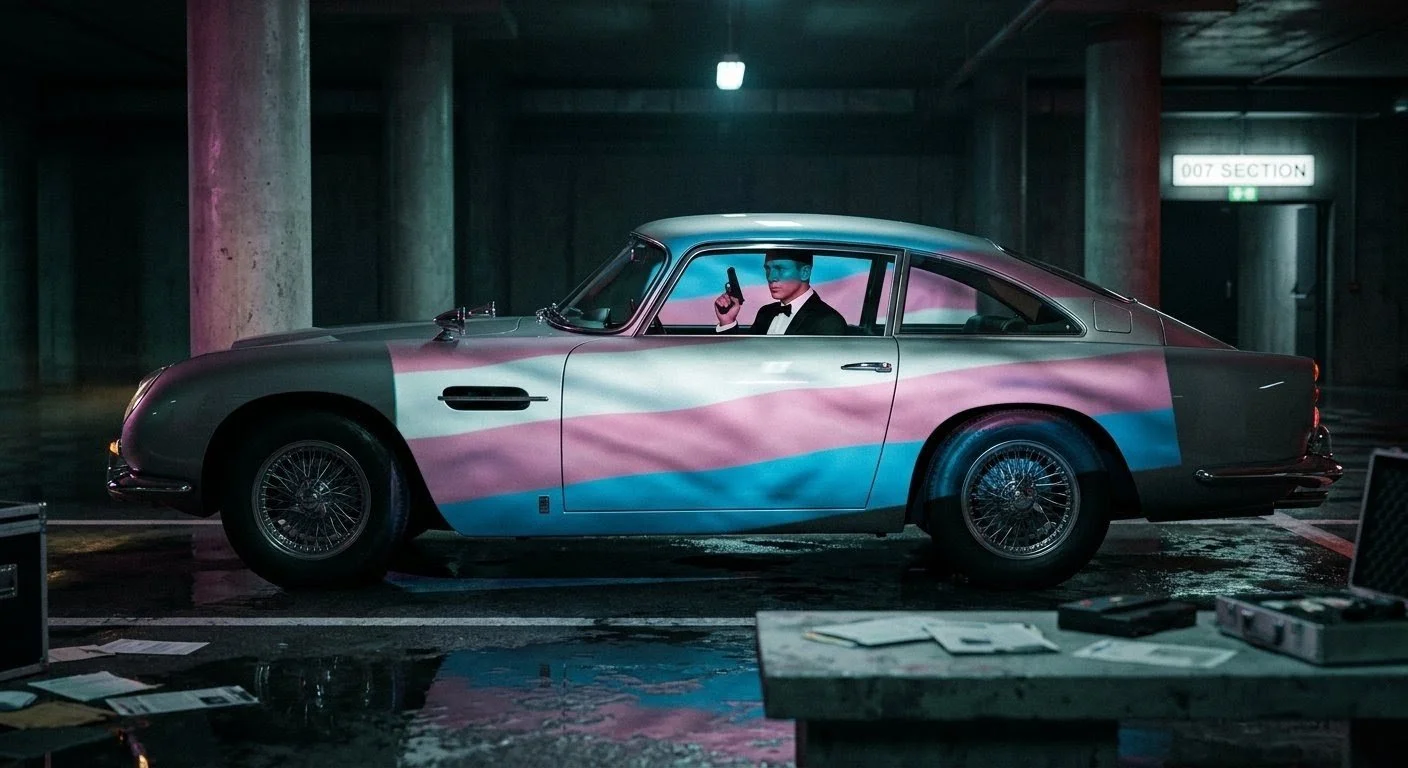
I can’t remember the first time I watched James Bond, but there was a point in time where he was sort of an ever-present figure in my life. I would regularly borrow VHS copies of Connery and Moore movies from my small town’s tiny local library. I had many memories of playing GoldenEye 007 with friends on a second-, possibly third- or fourth-, hand Nintendo 64. As well as some of the titles released in the early 2000s on the GameCube.
What I can remember is the feelings that Bond drew up within me. There is an undeniable allure to the series and character. We can be whisked away to beautiful exotic locations, something my smalltown upbringing made feel as exciting as I bet the films were back in the day. And Bond himself has maintained an allure that is both very of its time and timeless. I think it is no wonder that when I was younger I found myself idolising him. And in many ways, I think back on that time in my life and realise that my thought process was likely something along the lines of, “If I have to be a man, maybe I should be like James Bond.”
It wasn’t until many years after my initial ‘James Bond phase’ had ended that I realised that I was transgender, and it wasn’t until many years after that when I finally worked up the courage to transition. Then, as you might be guessing, it has taken some time to finally revisit my old friend and idol 007.
I don’t exactly know what the catalyst was, but earlier this year I got this idea in my head to watch all of the Bond films. I’ve yet to revisit Never Say Never Again and the 1967 Casino Royale, but I am working my way through the novels. At this point it's pretty easy to say that I’ve thoroughly rekindled my love for James Bond. But that sort of begs the question: what kind of appeal does Bond have for a trans woman?
Well in all honesty that depends on the trans woman in question. I can’t speak for anyone else but for me I think of it as sort of reaching full circle. In a way, it's therapeutic to revisit things from the past and have a reconciliation of sorts with them. But what I wasn’t expecting was that it wasn't a reconciliation with some boyish fantasy filled with fast cars, fast women, and a protagonist I’d now see as a reductive stereotype of a bygone era. Instead, it was, in many ways, akin to coming home. Or even coming out to someone and learning that they may not understand, but are at the end of the day trying to be supportive.
To me it feels like a coming out that I never got to have.
Between death, divorce, and nonexistence, I lost many of the male adult figures in my life, including my grandfather who introduced me to the character when I was young. I never got to come out to him, he died a few years ago and during that time I was told to keep my identity a secret. Despite living with him, helping care for him, and even quitting my “essential” job during the pandemic I never got to have that conversation with him.
In a way James Bond has been a replacement for that conversation. Not the best replacement, not one that will ever tie up those emotional loose ends, but one that does give me some solace.
When I went into my little project to revisit the series I had some assumptions. But I think a part of me was really searching for something to hold onto. I didn’t expect to find so much. Not only did I find a wonderful community of likeminded people who love the series. This website is a testament to that after all. But as I looked deeper, I found that maybe, unintentionally, the series has been queer the whole time.
It would be easy, though I think a little dry, to list every queer thing I can think of in and around the Bond series. There is a surprising treasure trove of real world and in-universe queerness to discover. Some of my favorites are learning that Ian Fleming’s friend and editor William Polmer was gay and vital to getting Casino Royale published, or gay Charles Gray who ‘never married’ and acted in two of the films. The one thing that I can point to above all as my main reason for loving James Bond is how much of a relatable character he is to me. Now, I’m not saying James Bond is a trans woman, though looking at his character using all the academic and literary critique skills I picked up in the course of working on my recently completed Masters degree gives me some pretty specific points that I want to bring up.
I’m going to be focusing on No Time To Die, with it being the last Bond film to date, and a fairly divisive film to some fans. I want to throw my hat in the ring and simply state that “hey this movie does some cool stuff.” Besides, with the recent release of 007 First Light focusing on the beginning of a new Bond, why not remember Craig’s last time in the suit with me? Be warned though, there will be some spoilers for the film in case you began your Bond journey more recently and have yet to finish the whole series.
No Time To Die does its best to capture the emotional, interpersonal narrative of On Her Majesty's Secret Service by giving Bond not only a love interest in Madeleine Swann, as established by the end of Spectre, but also gives him the emotional weight of having a daughter. Bond in this film is in a tug of war: on one side there is MI6 and the violence and masculinity that has gotten him to where he is. On the other side is a softer form of masculinity, dare say even a level of femininity, this idea of domesticity. To be a partner, a parent, to be normal and happy. James Bond wants to be a parent, he wants to put the old life behind him but, when he believes that Madeleine has betrayed him, he withdraws into himself.
Bond enters his true depression era, drinking alone, living alone, not always sleeping alone but not letting himself make connections with other people. An experience that I understand all too well. Before my transition I had some relationships, but what I mostly had was alcohol, work, and the feeling that any day I’d just fall down and give up. The things in life that I knew in my heart would make life bright and beautiful were out of reach. Bond, like myself, was lucky to have friends that tried to get him back into things. Felix Leiter and Paloma do draw him back into the world of violence but that does also kickstart his journey back into seeing what he truly wants in life.
To be with Madeleine, to be with Mathilde the daughter he didn’t know he had. But in the scenes where he interacts with Mathilde I see something in him that I’ve seen in myself. The desire to care for a child that might not be his. Bond is told several times before the reveal that Mathilde is not his child. But the way that he looks at her, the child of the woman he loves, reminds me of my last relationship. I had been seeing someone and we had grown incredibly close. I was able to meet her young child who had been raised by two trans women and, when he looked at me for the first time, and his mothers asked him who he thought I was, he looked at me and said. “That's a mama.”
It is easy for me to imagine that Bond never expected to be a parent, and while I had long wanted to be one it is also something I never expected to happen. And while my ex’s child wasn’t my own, I immediately fell in love with him. And in the time that I was around him, I wanted to care for him. That relationship ended because of a cross country move that I was unable to join in or follow, but that ache in my heart to care for a child hasn’t left. And while I was unable to have a sort of family because of distance, Bond was unable to have a family for another reason: a virus. Well, nanobots to be specific, but I don’t think it's hard to draw parallels with HIV/AIDs. But regardless of that, Bond is kept from his family because of circumstances outside of his control, something that many LGBTQ+ individuals can understand and relate to.
The feeling to me at the end of No Time to Die was one of understanding. I cried my eyes out and, for a little bit, I felt stupid. Stupid that James Bond being blown up by rockets made me so emotional. But as I sat watching the credits roll I realised that, despite everything, we cannot pick what art moves us and how. We may have taste and opinion, but when a film or any art conjures up a feeling of sadness, happiness, anger, frustration, disgust, or horror, that's the art doing its job.
Revisiting Bond isn’t a replacement for a father figure, it cannot replace the relationships I’ve lost out on, but what it can do is move me. Surprise me in the ways that I feel seen, and the ways that I feel because of what is put before me. Seeing Roger Moore in Octopussy denied a nightcap by an attractive women and turning to the henchman to ask him if he would care for one, or Daniel Craig in Skyfall letting Raoul Silva feel up his thigh and telling him that it isn’t his first time with a man does make me happy. The action and stunts, the gadgets, the queer sensibility that spycraft and espionage bring to the traditional masculine action star delight me. And at the end of the day, maybe that's enough.
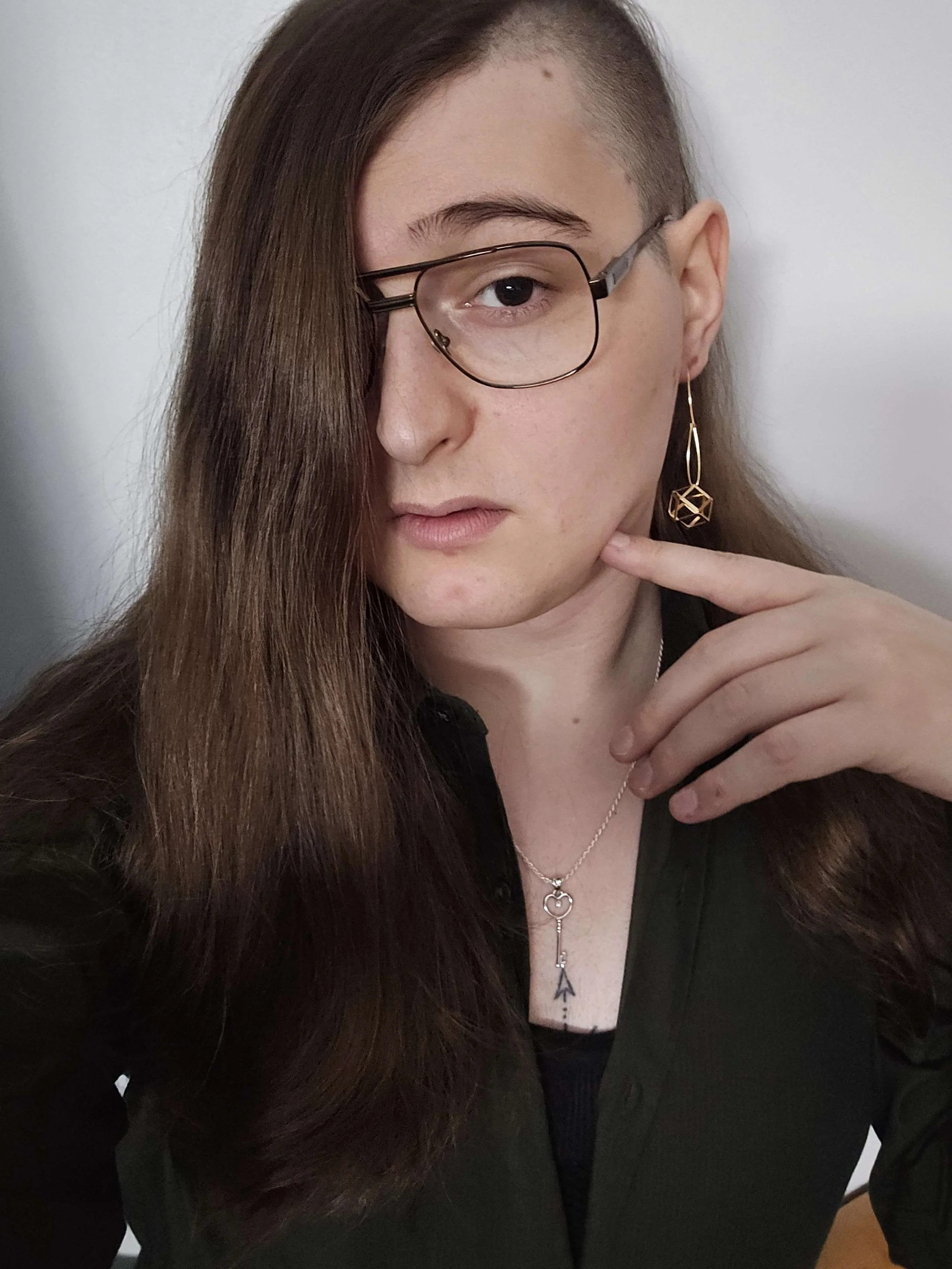
Delilah Deckert is a writer, photographer, and occasional queer wedding officiant from the Pacific Northwest. She posts her photography work at https://www.instagram.com/delilahs.aperture and has just begun writing her first novel, a queer take on the cold war thriller featuring a trans lead.