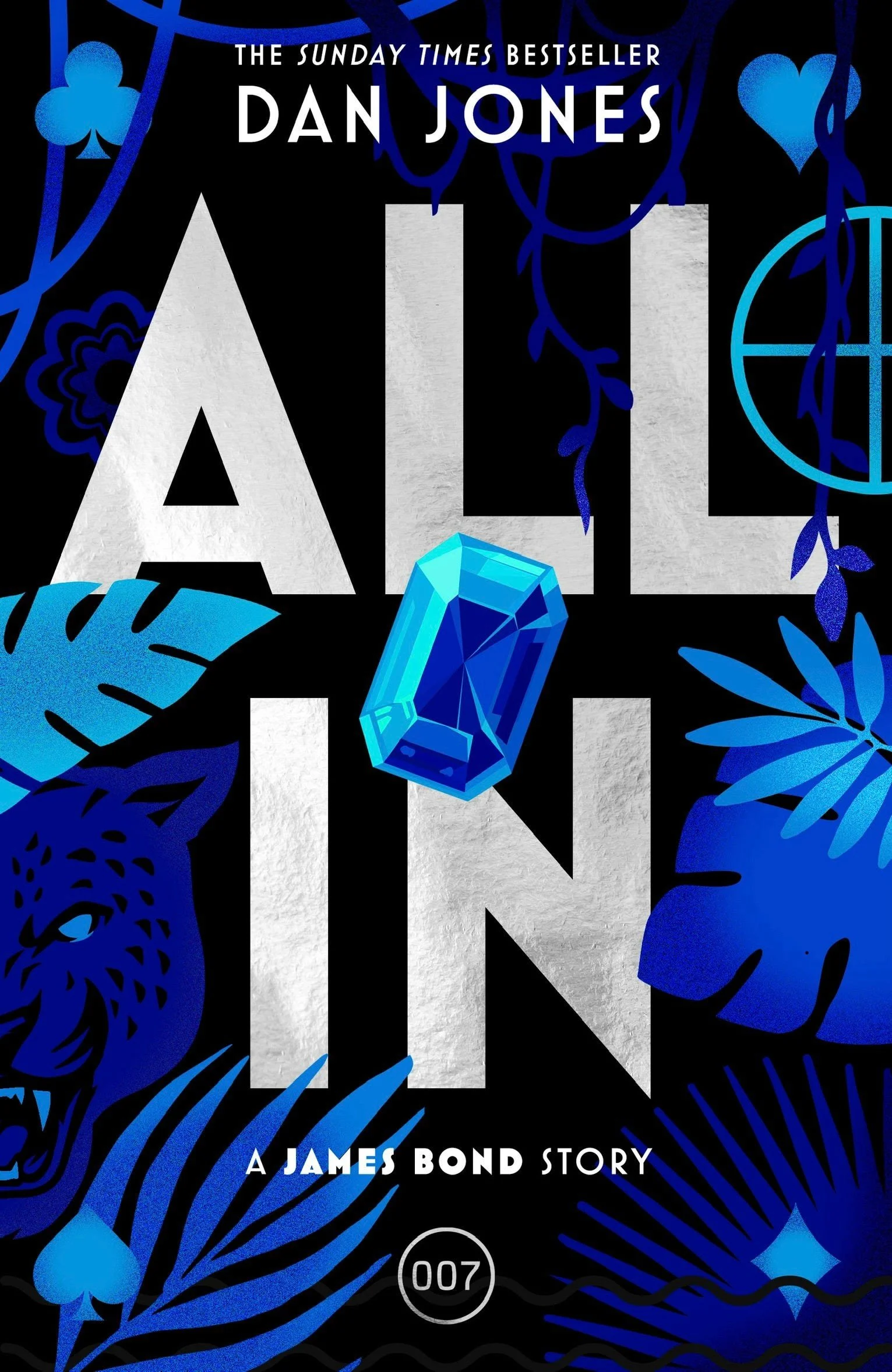
We already know how it ends; the exciting part is finding out why. Dan Jones's new novella, All In, takes James Bond to Ceylon in 1954 with Tiffany Case at his side, and anyone who has read From Russia, with Love knows that Tiffany will not be at his side for long. Fleming told us that Bond and Tiffany came apart, but he never told us why, and that gap is where All In lives. Let’s take a fresh look at the clues Fleming left us in the original novels…
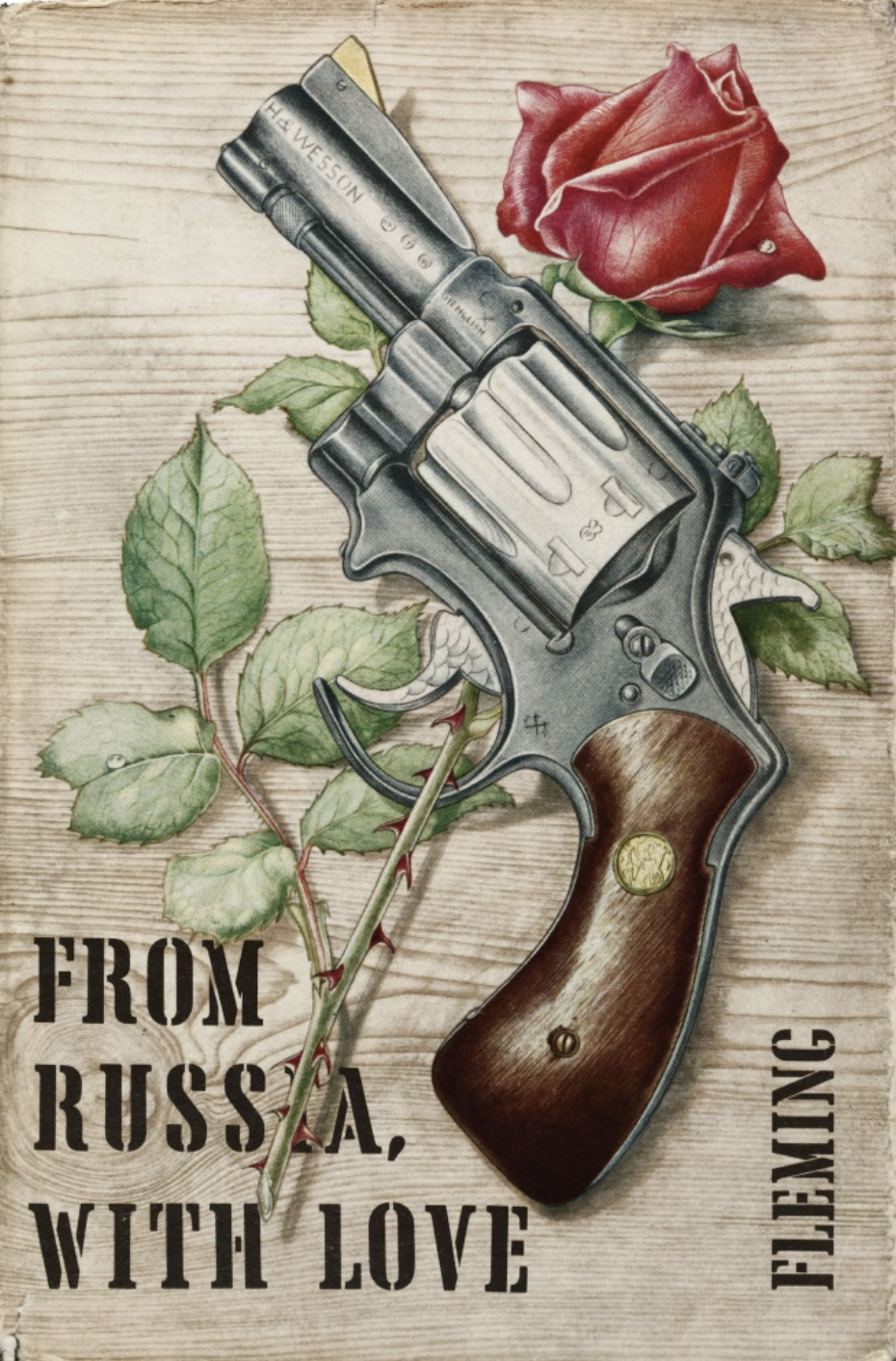
First, a promise. I'm not going to tell you anything about the plot of All In that Ian Fleming Publications hasn't already told you; reviews are under embargo, and I'm a man of my word, unlike some secret agents I could mention. What I want to do instead is look at what Fleming left us, because the clues to this relationship have been hiding in plain sight for seventy years.
The engagement that happened offstage
Fleming disposes of the whole affair in a single conversation. Early in From Russia, with Love, M summons Bond on a sweltering August day and, with uncharacteristic awkwardness, asks a personal question:
'I did hear that you had been, er, seeing a lot of each other since that diamond business. Even some idea you might be going to get married.'
Tiffany, it turns out, has gone off with a Marine Corps major from the American Embassy, and Bond's reply is gruff and very quick:
'Mixed marriages aren't often a success... Fine girl, but she's a bit neurotic. We had too many rows. Probably my fault. Anyway it's over now.'
And that's it. One of only two engagements in Bond's life (we'll come to the other) happens entirely between books. We never see a ring, a proposal or a row; we only hear Bond's version, delivered to his boss, in the clipped tone of a man filing a report he'd rather not write. Notice how much work that speech is doing. Tiffany is blamed ("a bit neurotic"), then America is blamed ("Mixed marriages"), then, almost as an afterthought, Bond blames himself ("Probably my fault") before slamming the file shut. If you've ever listened to a friend explain a break-up a little too briskly, you'll recognise the technique!
"Almost married already. To a man"
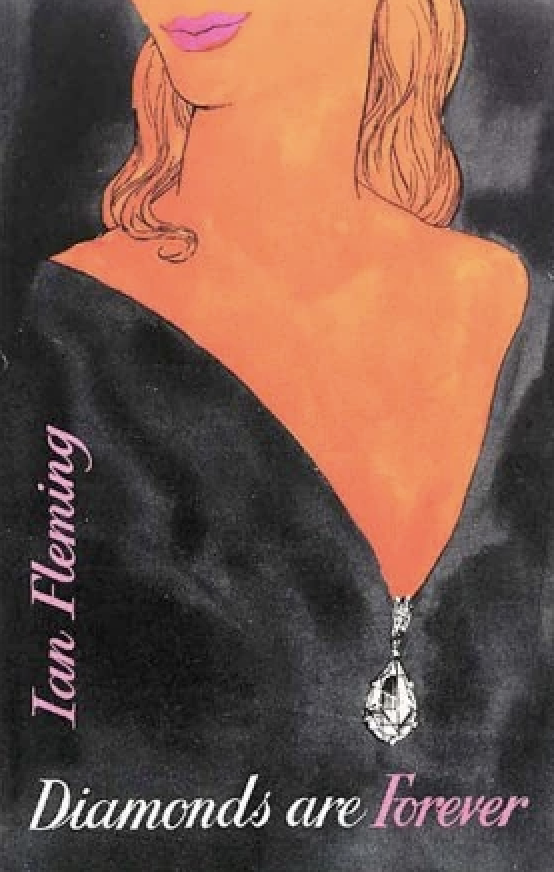
The real clues are in Diamonds Are Forever, on the voyage home aboard the Queen Elizabeth, in chapters Fleming added late, “almost as an "afterthought” (according the Fleming biographer Andrew Lycett). Over cocktails, Tiffany asks the question every Bond girl seems to get round to eventually: "Are you married?" Then she pauses and adds, "Or anything?" I love that "or anything", which leaves the door open for all sorts of arrangements. Bond says he occasionally has affairs, and Tiffany concludes that he must be "one of those old-fashioned men who like sleeping with women." (Who, I'd love to know, were the modern men of 1955 who didn't?)
Then she asks whether he would marry the right woman if he found her, and Bond gives what I think is the most revealing answer in the whole series:
'Matter of fact I'm almost married already. To a man. Name begins with M. I'd have to divorce him before I tried marrying a woman... She'd get me handing round canapés in an L-shaped drawing-room.'
It's a joke, of course; but it's a joke in which the bond between two men is a marriage, and marriage to a woman is a trap with canapés. Bond even has a theory to back it up: "Most marriages don't add two people together. They subtract one from the other." Children? He'd "Like to have some... But only when I retire."
Tiffany, meanwhile, tells him exactly what she wants: "I guess every girl would like to come home and find a hat on the hall table." She's fed up with being on her own, because, as the chorus girls on Broadway say, "It's a lonesome wash without a man's shirt in it." So by the end of Diamonds we have a woman who wants a hat on the hall table and a man who is already spoken for by his boss. Fleming has laid out the whole problem in one conversation. What he hasn't told us is how it actually played out, which is precisely the space a novella set between the two books gets to fill.
A man who keeps nearly proposing
Tiffany doesn't come out of nowhere. Bond's love life in the Fleming books follows a pattern, and it's worth having it in your head before you open All In.
In Casino Royale Bond starts out insisting that "Women were for recreation. On a job, they got in the way", and ends up calling through a bathroom door to Vesper Lynd, "Will you marry me?" ("You need a slave, not a wife," she snorts.) The next morning he means it: "That day he would ask Vesper to marry him. He was quite certain." We all know how that turns out. In Moonraker he plans a long, lazy drive through France with Gala Brand, then catches himself ("Was he getting serious about this girl?") just before she tells him she's marrying a detective-inspector the following afternoon. Each time Bond lets himself imagine a future, the woman, or the plot, whisks it away.
The books after Tiffany keep picking at the same scab. In Thunderball Bond asks a physiotherapist at a health farm, "Will you marry me?", as a compliment to her technique with a mink glove. Then, in On Her Majesty's Secret Service, he finally proposes to Tracy di Vicenzo, and Fleming tells us these were "words that he had never said in his life before, never expected to say." Readers of Casino Royale might raise an eyebrow at that; it's as if the narrator is quietly telling us that none of the earlier proposals counted. Even then, flying home newly engaged, Bond has a nightmare about being announced at a grand reception as "Commander and Mrs James Bond!", and wishes he were playing bridge at his club instead. You know the rest. By The Man with the Golden Gun he has decided that settling down with any woman would be "like taking 'a room with a view'", because "the same view would always pall."
Set against all of that, Tiffany is a fascinating exception. She's the first woman Bond seems genuinely ready to share his life with (the spare room of his flat, he tells her, is waiting), and she's the only one whose leaving Fleming bothers to report, and the only one who walks away of her own accord rather than through betrayal, a prior engagement or death. Which is exactly why the gap between Diamonds and From Russia has always intrigued me.
Why I'm going all in
Prequels and "midquels" usually have a problem: we know the ending, so where's the suspense? With Bond and Tiffany, knowing the ending is the whole point. We know they don't make it; Fleming has told us so, in Bond's own clipped words to M. What we've never had is the story behind "Probably my fault". Was it Tiffany who couldn't settle in London, or Bond who couldn't divorce M? Was the Marine Corps major a cause or a symptom? And when Bond tells M it's "over now", how much of that is true, and how much is a man getting his story straight before he goes back to work?
There's another reason the title made me smile. 2026 is the National Year of Reading, and the campaign the National Literacy Trust and the Department for Education launched for it is called, of all things, Go All In. Its tagline is "If you're into it, read into it", and I can't think of a better description of what Bond fans have been doing for seventy years; we're into it, so we read into it, down to the last raised eyebrow in a conversation with M.
This matters to me more than I can succinctly put into words. I'm a teacher, and reading has always been such an important part of my own life. Books opened up the world to me long before I could travel it; they let me escape to places I'd never been and into lives that weren't mine. That's exactly what Fleming did for his first readers in post-war Britain, still living with rationing when Casino Royale appeared, whisking them off to casinos, Caribbean islands and the Orient Express. So I've watched with real worry as reading for pleasure has declined among children, young people and adults alike, which is exactly what the campaign has been set up to reverse. If a new Bond novella with a cheeky title tempts even one lapsed reader back to Fleming, or sends a teenager off to find out who Tiffany Case was and why she left, then Ian Fleming Publications will have done its bit for the National Year of Reading.
I've already travelled to 1954 Ceylon once, courtesy of a digital proof, so I know the answers Dan Jones comes up with. I'm not going to tell you what they are (embargo, remember!), but I will say this: if you've ever wondered why the most famous bachelor in fiction keeps "almost" getting married, this is one to read. On 3 December I'll be making the journey again, this time with the hardback in my hands and a well-thumbed copy of Diamonds Are Forever beside it, because the best escapes are worth taking twice.
All In by Dan Jones is published by Ian Fleming Publications on 3 December 2026, as a hardback special edition from ianflemingshop.com, with e-book and audiobook editions. Find out more about Go All In: The National Literacy Trust and Department for Education unveil "Go All In"


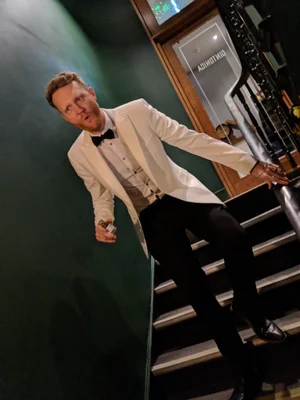
Author Dan Jones